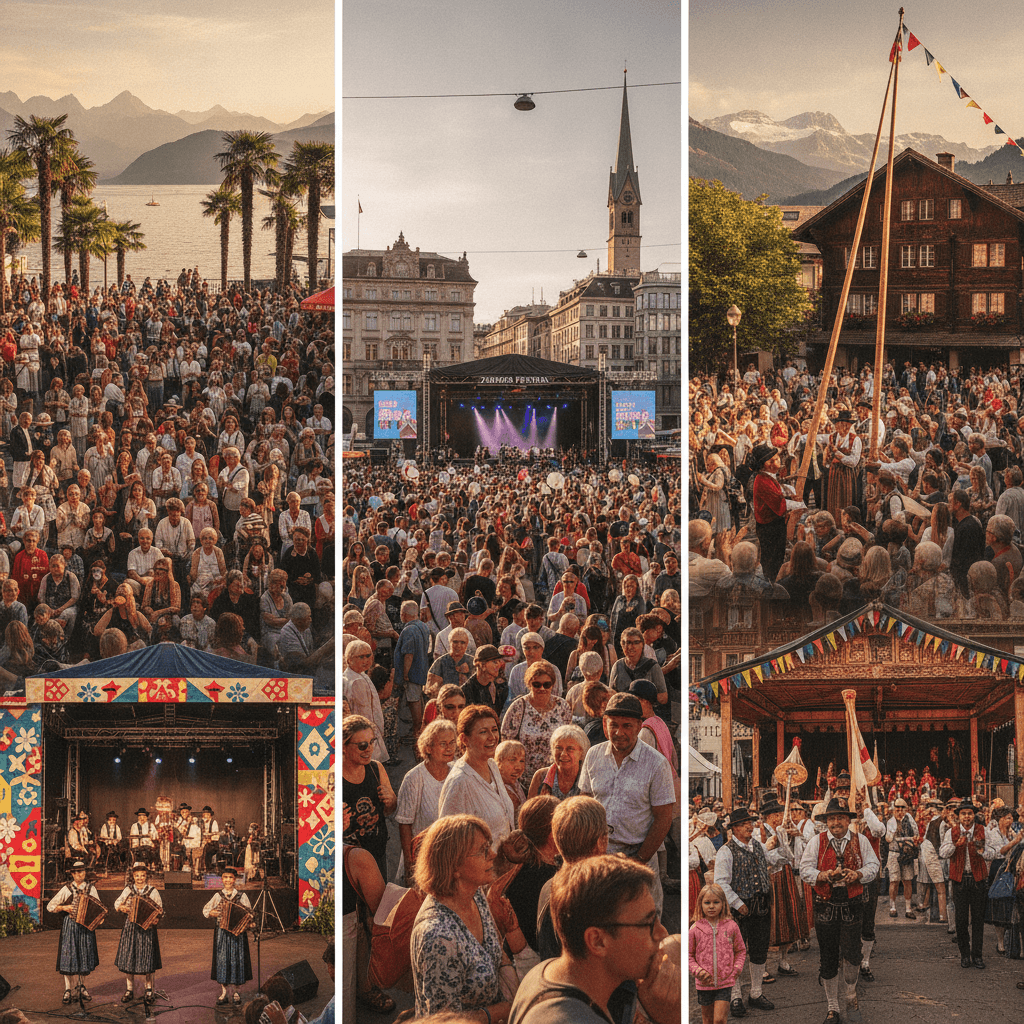
Why Switzerland Is So Appealing: 100 Things People Love About the Country
Svájc mindennapi kultúráját a precíz infrastruktúra, a természet közelsége és a sajátos társadalmi szokások határozzák meg. A helyi élet alapkövei közé tartozik a vasúti és postai pontosság, a Migros és Coop üzletláncok köré épülő vásárlói identitás, valamint a vasárnapi zajtilalom szigorú betartása. A gasztronómiában az Aromat ételízesítő, az Ovomaltine, a szezontól független fondü- és raclette-fogyasztás, valamint az almaszósszal tálalt tészta a legmeghatározóbbak. A sikeres beilleszkedéshez elengedhetetlen a svájciak udvarias, indirekt kommunikációjának (például a „Momoll tiptop” kifejezésnek) a helyes értelmezése.
What is Switzerland’s national holiday, and what does watson.ch’s list celebrate?
Switzerland’s national holiday August 1, commemorating the 1291 federal oath. On this day, August 1, 2026, the Swiss editorial platform watson.ch published its feature “100 Dinge, die wir an der Schweiz lieben”.
The list presents one hundred small details and broader cultural phenomena that both locals and people living abroad love about Switzerland (Was wir an der Schweiz lieben). Rather than covering all one hundred items below, we introduce the categories that most characteristically reflect everyday Swiss culture (Schweizer Alltagskultur).
Four major themes emerge from the list: gastronomy, punctuality and infrastructure, unwritten social rules, and proximity to nature. These are also the aspects that stand out most quickly to a Hungarian moving to Switzerland.
Which gastronomic icons are indispensable in Swiss households?
Aromat seasoning and Ovomaltine cocoa powder are staple products found in almost every Swiss kitchen. These brands are so deeply embedded in everyday life that many households have been buying the same products for generations.
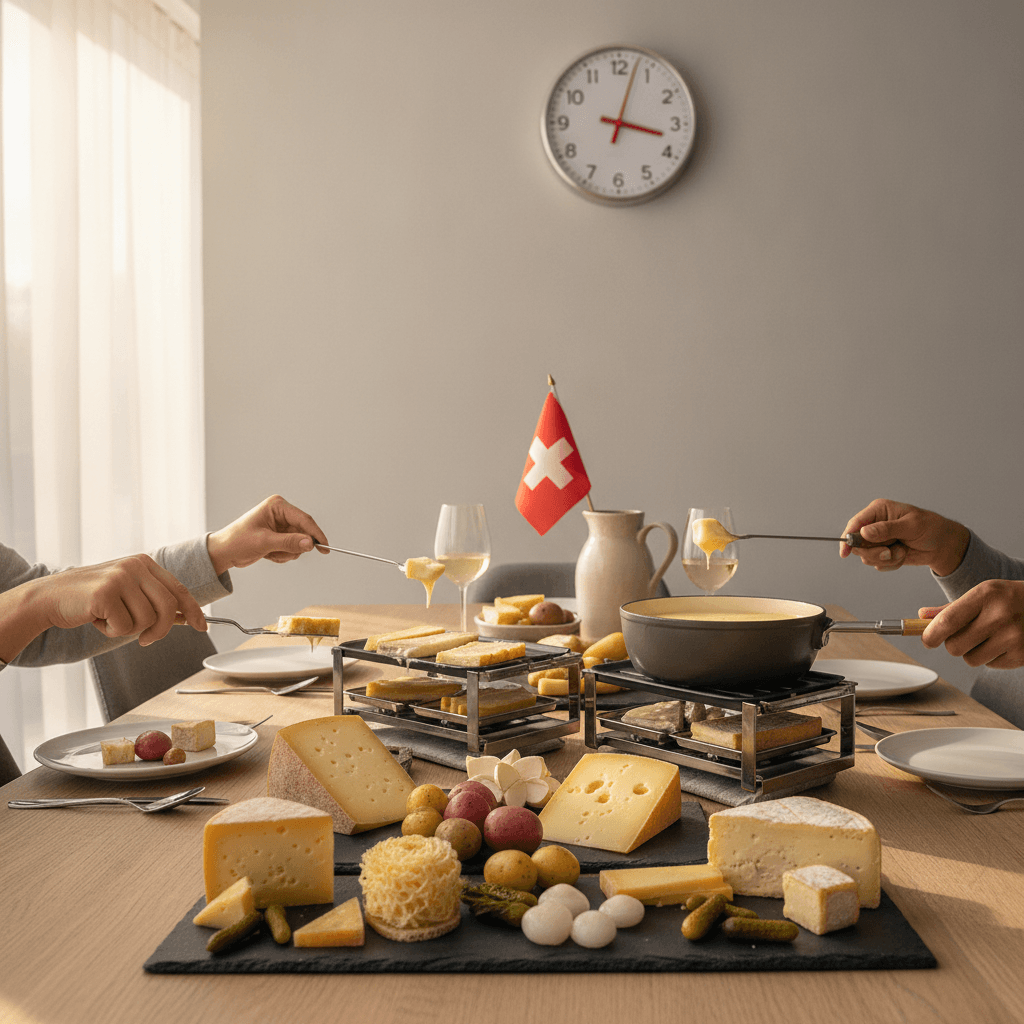
Cheese culture also plays a central role. In Switzerland, there is no season for melted cheese: fondue and raclette can be served at any time of year, not only in winter.
This is also reflected in a characteristic household item:
Raclette grill (Raclette-Öfeli): almost every family has its own small raclette grill with individual pans.
Fondue warmer (Fondue-Rechaud): an appliance stored in the kitchen cupboard (Chuchichästli) and brought out regularly.
Pasta with apple sauce (Teigwaren mit Apfelmus): it is a Swiss peculiarity to eat pasta with apple sauce as a sweet-and-savoury combination.
There is also an unwritten social divide when it comes to shopping: people often grow up as committed customers of either the Migros or the Coop chain. The Swiss describe this phenomenon using the terms Migros-Kind and Coop-Kind, and this affiliation is often inherited from childhood.
How do punctuality and reliability shape everyday life in Switzerland?
Swiss punctuality is not merely a stereotype but the foundation of everyday infrastructure. The SBB (Swiss Federal Railways) mobile app displays connections accurate to the second, making it one of the best-known symbols of digital precision.
This is accompanied by a visual symbol: the dial and red second hand of the iconic Swiss railway station clock form such a distinctive design that Apple previously adopted them for the clock icon in the iOS operating system.
Punctuality does not stop at the railway. Die Post (Swiss Post) delivers parcels with pinpoint accuracy even to the most remote mountain valleys, while waste management and separate recycling — with aluminium, glass and PET collected separately — operate almost flawlessly.
This reliability extends to mobile networks as well: coverage and service quality are consistently high in most regions. For someone newly arrived from Hungary, this is one of the most quickly noticeable differences in everyday life.
What unusual customs and unwritten rules make life in Switzerland unique?
Switzerland has numerous small social rules that are never written down anywhere, yet everyone follows them. Before eating, it is customary to wish one another a good appetite (En Guete), while when drinking, you are expected to toast again with every new glass — strictly looking each other in the eye as you do so.
Sunday is a day of rest: activities that generate noise, such as mowing the lawn or doing loud DIY work, are prohibited. This custom is also actually regulated in many municipalities and cantons, so it is worth familiarising yourself with the local rules before getting out a power drill on Sunday morning.
Avoiding conflict is another characteristic trait. If a meal in a restaurant has turned out only moderately well, a Swiss guest will often politely reply to the waiter’s question: “Momoll tiptop” — meaning “everything’s fine”. This kind of indirect communication often surprises Hungarian conversation partners accustomed to a more direct style.
Public safety is also exceptional. Even a wallet left on a towel at the swimming pool (Badi) is generally safe, and people can move around the streets calmly at night as well.
How does the appreciation of nature and local life manifest itself in everyday life?
In Switzerland, it hardly matters where someone lives: within minutes, it is possible to leave the urban environment and reach pristine nature. This proximity fundamentally shapes how people spend their free time in the evenings and at weekends.
In autumn, a characteristic natural phenomenon is the Nebelmeer, or “sea of fog”: dense fog covers the valleys while brilliant sunshine bathes the mountain peaks. This sight regularly appears in locals’ social media posts.
The unmistakable soundscape of mountain hikes includes the clanging of bells (Kuhglocken) around the necks of grazing cows. For many people, this acoustic experience is one of the most distinctive memories of the Swiss countryside.
From a Hungarian perspective: how does this list help deepen understanding of Swiss culture?
These details are not merely curiosities but practical reference points for Hungarians moving to Switzerland or already living there. A few specific connections:
Shopping habits: choosing between Migros and Coop is often not merely a matter of price but also a form of identity — it is worth trying both before committing to one.
Sunday quiet: those arriving from Hungary, where weekend DIY work is commonplace, need to consciously adjust to Swiss Sunday tranquillity in order to avoid misunderstandings with neighbours.
Communication style: understanding indirect feedback of the “Momoll tiptop” variety helps Hungarian employees avoid misinterpreting the restrained criticism of Swiss colleagues or neighbours.
Punctuality as a norm: the reliability of the SBB app and the postal service is not merely a convenience but an expectation — in Swiss workplaces and public offices, punctuality is a basic requirement, not a virtue.
Community integration: Hungarian communities in Zürich, Bern, Genève and Basel often exchange experiences about precisely these small cultural differences when helping newly arrived compatriots find their way around.
The list is therefore not merely a nostalgic look back for locals, but also a kind of hidden user guide for those arriving in the country from elsewhere.
Sources
watson.ch — 100 things we love about Switzerland
Related Articles
In Brief
Swiss everyday culture is shaped by culinary icons, exceptionally punctual infrastructure, strict unwritten social rules, and close proximity to nature. For Hungarians moving to Switzerland, successful integration depends on respecting Sunday quiet hours, treating punctuality as a fundamental requirement, and understanding the indirect communication style of the Swiss.
Key Takeaways
- Respect Sunday quiet hours and avoid noisy activities such as mowing the lawn or drilling on that day.
- Treat punctuality as a fundamental requirement in everyday life, public offices, and the workplace alike, relying on the precision of the SBB railway app.
- Learn Swiss dining and toasting etiquette: wish others a good appetite (En Guete) before a meal, and look your partner squarely in the eye when clinking glasses.
- Interpret indirect feedback correctly at work and in private life, as the Swiss often express satisfaction to avoid conflict (for example, “Momoll tiptop”) even when a situation is only average.
- Try both major supermarket chains (Migros and Coop) to understand local consumer identity and integrate into the country’s consumer culture.
Frequently Asked Questions
What are the essential Swiss culinary staples found in every household?
Aromat seasoning and Ovomaltine cocoa powder are indispensable in Swiss kitchens. In addition, almost every household has its own raclette grill (Raclette-Öfeli) and fondue burner (Fondue-Rechaud), which are used throughout the year, not only in winter.
What do the terms Migros-Kind and Coop-Kind mean?
These terms refer to a shopping identity inherited by many Swiss people from childhood. A significant portion of the population is committed either to the Migros or the Coop chain, and this affiliation often determines throughout their lives where they do their everyday shopping.
Is it really forbidden to do noisy work on Sundays in Switzerland?
Yes. Sunday is a day of quiet in Switzerland, when mowing the lawn, noisy DIY work, and drilling are prohibited. This custom is also officially regulated in many municipalities and cantons, so it must be strictly observed to avoid conflicts with neighbours.
What is the proper etiquette for dining and toasting in company in Switzerland?
Before a meal, people are expected to wish one another a good appetite by saying “En Guete.” When drinking, you should clink glasses separately with each new glass, while looking the other person directly in the eye.
What does the Swiss expression “Momoll tiptop” mean in practice?
“Momoll tiptop” means “everything is fine.” It reflects the Swiss preference for conflict-avoidant and indirect communication—for example, a restaurant guest may say this to the waiter even when the food was actually only average.
How safe are Swiss beaches and public spaces?
Public safety is exceptionally high in Switzerland. Even valuables and wallets left on towels at beaches (Badi) are generally safe, and people can travel through the streets at night with a strong sense of security.