Why doesn't Switzerland have a "real" president?
In Switzerland, executive power is exercised by the Federal Council (Bundesrat / Conseil fédéral), whose seven members collectively fulfil the role of head of state and head of government. No single person holds ultimate decision-making authority: the body makes its decisions by consensus and on the basis of the collegiality principle.
Each of the seven Federal Councillors (Bundesrat) simultaneously heads a federal ministry (Departement). The body is elected by parliament for four-year terms — not directly by the people.
This arrangement is no accident. Switzerland is made up of four national linguistic and cultural communities (German, French, Italian, and Romansh), and the federal structure was designed from the outset to prevent any single group from permanently dominating the others. Collective executive power institutionalises this balance.
What does this mean in practice? In Switzerland, the direction of government is determined not by the personal will of one politician, but by a collegial decision. Public disagreements between councillors are prohibited: the body presents a unified position externally, even when internal debates take place.
Why does the president change every year?
The Swiss president (Bundespräsident / Président de la Confédération) is elected by parliament — but only for a one-year term, and the position carries significantly less weight than in other countries.
The Swiss president is not the head of executive power. Their duties are:
presiding over meetings of the Federal Council,
mediating in the event of internal disputes,
representing Switzerland on ceremonial occasions abroad.
They hold no special powers. The presidential role is filled by the seven councillors on a rotating basis — typically the most senior or next-in-line member takes on the role. As a result, many Swiss citizens cannot name the current president off the top of their head.
From a Hungarian perspective, this may seem unusual: in Hungary, both the constitutional role of the president and the person of the prime minister feature prominently in public discourse. In Switzerland, this person-centred political culture is deliberately absent from the system.
How is the Swiss parliament structured?
The Swiss parliament (Bundesversammlung / Assemblée fédérale) is bicameral:
Chamber | Name | Number of members | Method of election |
|---|---|---|---|
Lower House | National Council (Nationalrat) | 200 members | Proportional representation, by canton |
Upper House | Council of States (Ständerat) | 46 members | Cantonal representation (2 members per canton, 1 per half-canton) |
Members of parliament are elected by the people, every four years. The Federal Council, however, is elected by parliament — in the Swiss system, these two levels are therefore separate from one another.
Cantonal level: Switzerland consists of 26 cantons (Kanton), each enjoying a wide degree of autonomy. Taxation, education, healthcare regulation, and many other areas fall under cantonal jurisdiction. This federal structure (Föderalismus) is one of the cornerstones of Swiss politics.
Who sits in the Swiss parliament?
One defining feature of the Swiss parliamentary system is proportional representation (Proporzsystem). Parties receive seats in proportion to the votes they receive, which means parliament genuinely reflects the distribution of voters — and no single party holds a lasting absolute majority.
The four largest parties, which are traditionally also represented in the Federal Council:
SVP (Schweizerische Volkspartei / Union démocratique du centre): right-wing, conservative, immigration-sceptic
SP (Sozialdemokratische Partei / Parti socialiste): centre-left, social democratic
FDP (FDP. Die Liberalen / PLR): liberal-conservative, pro-business
Die Mitte (formerly CVP): Christian democratic, centrist
The composition of the Federal Council is governed by an informal balancing principle known as the "magic formula" (Zauberformel): the seven council seats are distributed among the four major parties in proportion to their share of mandates. This principle has been in place since 1959, though the proportions have shifted over the decades.
From a Hungarian perspective: the Swiss party system is not bipolar. There is no "governing party" and "opposition" in the conventional sense — the major parties simultaneously hold executive power and sit in parliament, yet still debate one another. This consensus-oriented political culture (Konkordanzdemokratie) is one of the foundations of the country's stability.
What is direct democracy, and why does it seem unusual to Hungarians?
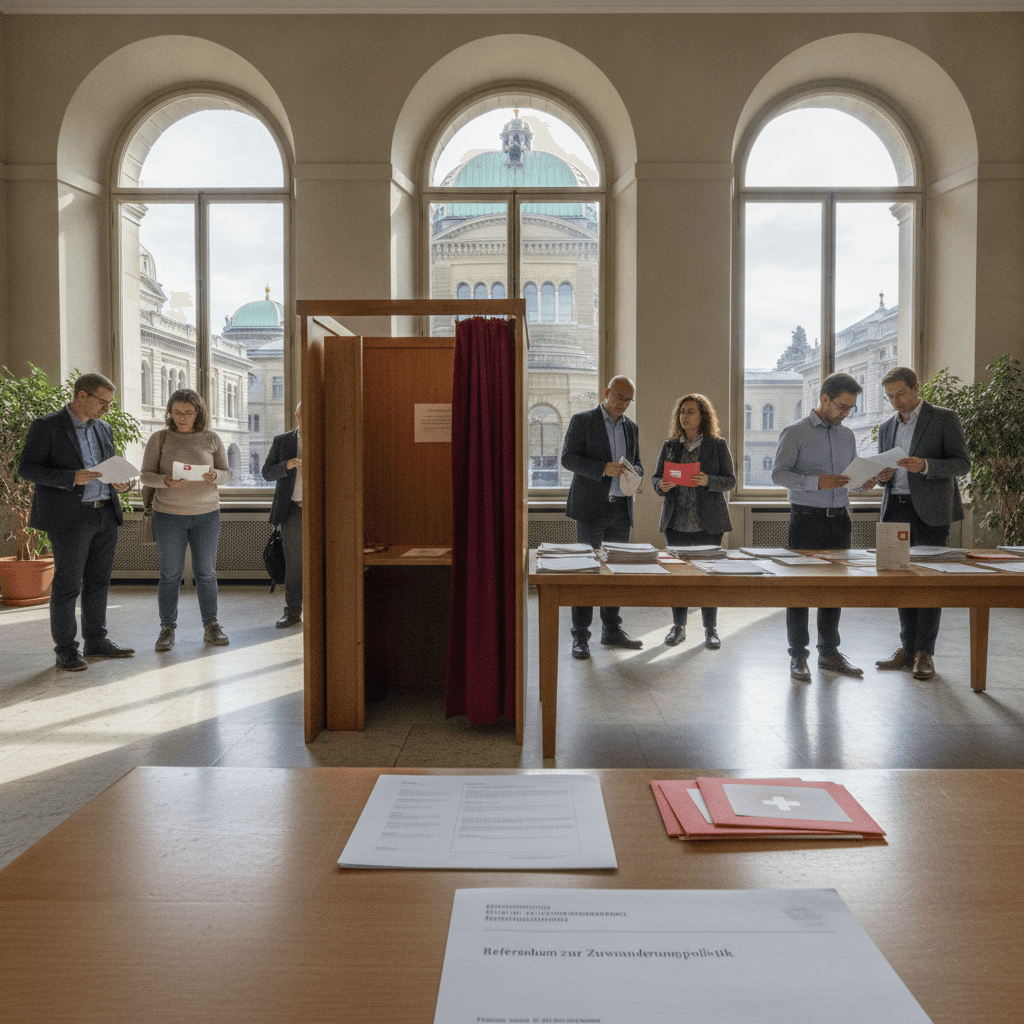
Swiss direct democracy (direkte Demokratie / démocratie directe) means that citizens do not merely elect representatives — they also vote directly on laws and matters of public policy.
In Switzerland, voting days (Abstimmungssonntag) are held four times a year, on which eligible citizens can decide on multiple issues at once. This is unique on a global scale: no other country holds direct popular votes at the federal level with such regularity.
Why does this seem unusual from a Hungarian perspective? In Hungary, legislation is the exclusive domain of parliament, and the scope for popular initiatives is limited and rare. In Switzerland, the legislative process begins with the very question: "What will the citizens think?"
How do referendums and popular initiatives work?
Swiss direct democracy rests on two main instruments:
Referendum (Referendum)
A referendum can be either mandatory or optional:
Mandatory referendum (obligatorisches Referendum): every constitutional amendment automatically requires popular approval. If parliament amends the constitution, a vote is unavoidable.
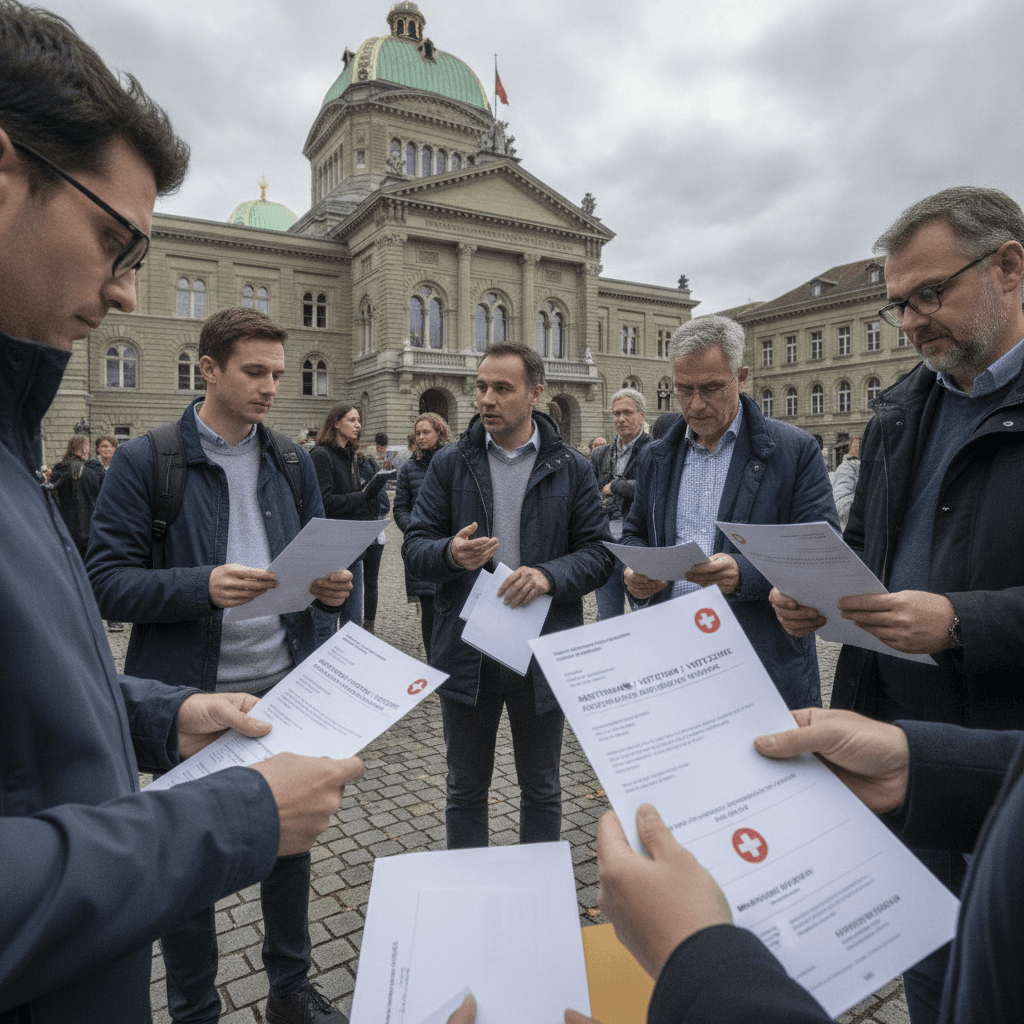
Optional referendum (fakultatives Referendum): if 50,000 signatures are collected within 100 days against a parliamentary law, that law must be put to a popular vote. If voters reject it, the law does not come into force — even if parliament and the Federal Council supported it unanimously.
Popular initiative (Volksinitiative)
Any Swiss citizen or group — from the age of 18 — can initiate an amendment to the constitution by collecting 100,000 valid signatures within 18 months. Signatories must hold Swiss voting rights and must provide a verifiable residential address.
If the signature collection is successful, the matter goes to a mandatory referendum. If voters approve it, the Federal Council must implement it — regardless of its own political preferences.
Practical examples from recent years:
In 2021, citizens voted to reject the CO₂ Act, which parliament had previously passed.
In 2020, voters approved the 'burqa ban' initiative, despite the Federal Council's opposition.
In 2021, voters approved the legal recognition of same-sex marriage.
These cases illustrate clearly: in the Swiss system, the final word belongs to the citizens, not to politicians.
Who can vote in Switzerland — and what about Hungarians?
The right to vote (Stimmrecht) at the federal level is tied to Swiss citizenship. This means that Hungarians living in Switzerland who do not hold Swiss citizenship — including those with a B or C permit — cannot participate in federal or cantonal votes.
However, a few cantons and several hundred municipalities (Gemeinden) allow permanent foreign residents to participate in local-level votes. These rights vary by canton:
In the cantons of Neuchâtel and Jura foreign permanent residents may also vote at the cantonal level.
In several municipalities in Genève and Vaud long-term foreign residents are entitled to vote at the local level.
What does this mean for Hungarians living in Switzerland? Four times a year, they see their neighbours, colleagues, and acquaintances heading to the polls — and they are excluded from this, unless they obtain Swiss citizenship (Einbürgerung / naturalisation). The requirements and process for obtaining citizenship is a separate topic, covered in detail in the relevant article in the Knowledge Base.
Sources
Swiss Federal Chancellery (Bundeskanzlei / Chancellerie fédérale): ch.ch — the official explanation of the Swiss political system and voting rights
Swiss Federal Chancellery — direct democracy: bk.admin.ch
Swiss Federal Council: admin.ch
The Local Switzerland: "A foreigner's guide to understanding Swiss politics in five minutes" (29 November 2021) — thelocal.ch
In Brief
Switzerland has no single prime minister or president who holds the reins of power. Executive authority is exercised collectively by a seven-member body, the Federal Council (Bundesrat / Conseil fédéral). Legislative decisions are ultimately made not by politicians, but by citizens — through mandatory and optional referendums. This system is unique in Europe, and for Hungarians arriving in Switzerland it is often one of the biggest surprises. ---
Key Takeaways
- Switzerland has no single 'strong' president or head of government: executive power is exercised collectively by the seven-member Federal Council (Bundesrat).
- The annual presidential rotation is a ceremonial function — the president holds no special decision-making authority.
- Final approval of laws rests with the citizens: any parliamentary decision can be vetoed through a referendum.
- Switzerland holds four voting days per year — a globally unique practice.
- Voting rights at the federal level are tied to Swiss citizenship; Hungarians living in Switzerland are largely excluded from this, except under the local-level rules of a few cantons and municipalities.
- The Swiss party system is consensus-oriented: the four major parties simultaneously hold positions in both the executive and parliament, and this is one of the structural foundations of the country's stability.
Frequently Asked Questions
Who is the president of Switzerland?
The Swiss president is elected by parliament for a one-year term from among the seven members of the Federal Council. The role is ceremonial in nature: the president chairs council meetings and represents Switzerland abroad, but holds no special decision-making powers. The president changes every year, which is why many people — including Swiss citizens — cannot name the current incumbent off the top of their head.
What is the Federal Council, and how is it elected?
The Federal Council (Bundesrat / Conseil fédéral) is Switzerland's seven-member collective executive body, which simultaneously fulfils the roles of head of state and head of government. Its members are elected by parliament for four-year terms; the four largest parties share the seven seats according to the so-called 'magic formula' (Zauberformel).
Can a Hungarian with a B permit vote in Switzerland?
Not in federal or most cantonal votes. Voting rights are generally tied to Swiss citizenship. Exceptions exist in a few cantons (e.g. Neuchâtel, Jura) and several hundred municipalities, where foreign permanent residents may vote at the local level. The list of relevant cantons and municipalities can be verified with cantonal authorities.
What is the difference between a mandatory and an optional referendum?
A mandatory referendum (obligatorisches Referendum) is automatically required for every constitutional amendment — the constitution cannot be changed without a citizens' vote. In the case of an optional referendum (fakultatives Referendum), any parliamentary law can be put to a popular vote if 50,000 signatures are collected within 100 days.
How can a popular initiative be launched in Switzerland?
Any person or group holding Swiss voting rights can launch a constitutional amendment initiative (Volksinitiative) from the age of 18, provided they collect 100,000 valid signatures within 18 months. Signatories must hold Swiss voting rights and provide a verifiable address. If the signature collection is successful, a mandatory referendum must be held.
Why does Switzerland have 26 cantons, and why does it matter?
The 26 cantons (Kanton / canton) are the basic units of Switzerland's federal structure, each enjoying a wide degree of autonomy. Taxation, education, healthcare regulation, and many other areas fall under cantonal jurisdiction. This means that tax burdens, the school system, and certain administrative procedures can vary significantly across Switzerland depending on where you live.
Why does no single party achieve lasting majority rule in Switzerland?
Due to the proportional electoral system (Proporzsystem) and the consensus-oriented political culture (Konkordanzdemokratie), no single party ever gains a lasting absolute majority. The four major parties traditionally participate in executive power together, which reinforces stability but makes rapid, radical shifts in direction difficult.
When are votes held in Switzerland?
There are four fixed voting Sundays (Abstimmungssonntag) per year, typically in March, June, September, and November. On each voting day, eligible citizens may decide on several federal, cantonal, and local issues simultaneously. ---