How does Switzerland protect drinking water sources and groundwater resources?
Swiss groundwater protection applies increasingly strict rules as one approaches water extraction sites. Below, we review how the system is structured and what this means for the population.
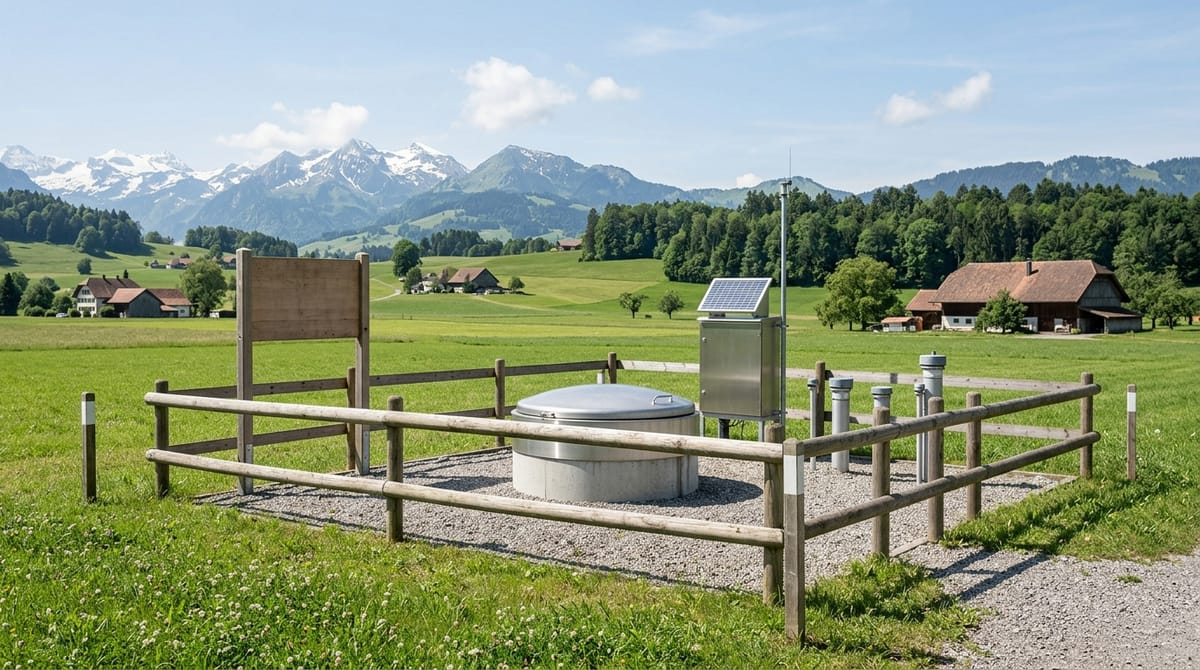
In Switzerland, groundwater is one of the most important sources of drinking water, which is why federal regulations set out in detail the protection afforded to water abstraction sites and their surroundings. The system is based on the so-called onion-layer principle: the closer one gets to a groundwater abstraction site (Grundwasserfassung), the stricter the restrictions on land use become, as stated in the Federal Office for the Environment (BAFU) summary on groundwater protection.
Why is strict groundwater protection necessary?
Groundwater contamination is difficult to reverse, and a contaminated water abstraction site may become unsuitable for drinking-water extraction in the long term. For this reason, federal water protection regulations protect not only the well or spring itself, but also the wider area from which water flows towards the abstraction site. This approach makes it possible for pollutants—whether of industrial, agricultural or domestic origin—to be filtered out well before reaching the abstraction site, or prevented from entering the area in the first place.
How is the protection system structured?
According to BAFU, federal regulations apply a multi-stage protection system in which the rules become stricter as one approaches the water abstraction site (source). In practice, this means that the strictest restrictions apply in the immediate vicinity of the abstraction site, while less stringent—but still mandatory—land-use requirements apply in the wider so-called inflow area (Zuströmbereich, Zu). The system also includes protection zones of varying degrees (Schutzzone S1, S2, S3), which surround the immediate surroundings of wells and springs and the groundwater flow leading to them.
Protection is not limited to wells and springs that are already in operation. According to BAFU, the regulations cover all usable groundwater resources, designated as Gewässerschutzbereich Au, including areas where there is currently no water abstraction site but one may be established in the future (source). This preventive approach ensures that future drinking-water resources are not built over or contaminated prematurely.
What does this mean for people living in Switzerland and those moving to the country?
The system primarily affects people who purchase land, undertake construction, or plan agricultural or industrial activities in a particular area. If the intended property or plot lies within a groundwater protection area (Gewässerschutzbereich Au) or a protection zone, it is advisable to consult the competent authority in the relevant canton about the restrictions applying to land use—for example, the construction or earthworks regulations that apply.
For everyday water consumers, the system’s practical impact is primarily indirect: the purpose of the multi-stage, precautionary regulation is to ensure that tap-water quality remains reliable in the long term without requiring consumers to take any specific action. Switzerland’s water supply is therefore based not on a single measure, but on a consistently applied, area-based protection system that gradually becomes less stringent with increasing distance from the water abstraction site.
Anyone looking for a new home or starting a property development project in Switzerland can find out from the local cantonal environmental or building authority exactly which protection category a particular area falls into and what practical restrictions this entails for property use.
Sources
admin.ch — Grundwasserschutz
admin.ch — Schutz von Grundwasserfassungen
In Brief
In Switzerland, water extraction sites and the areas through which water flows toward them are protected by a multi-level protection system. Restrictions become stricter as one approaches the water extraction site, and the system also covers groundwater resources that may be used in the future.
Key Takeaways
- Groundwater contamination is difficult to reverse, which is why Switzerland protects not only wells and springs but also the areas through which water flows toward them.
- Within the protection system, the rules for protection zones S1, S2 and S3, as well as catchment areas, become stricter as one approaches the water extraction site.
- Protection extends beyond currently used water extraction sites to groundwater resources that may be used in the future.
- Before purchasing land or planning construction, industrial or agricultural activities, it is advisable to check the area's protection category with the competent cantonal authority.
Frequently Asked Questions
Which areas are covered by Swiss groundwater protection?
Protection covers water extraction sites, the protection zones designated around them, catchment areas, and groundwater resources classified under the Gewässerschutzbereich Au category that are currently used or may be used in the future.
What should be checked before purchasing property or undertaking construction?
You should check whether the property in question lies within a groundwater protection area or protection zone, and what construction, excavation or other land-use restrictions apply. The competent authority of the relevant canton can provide precise information.
Related articles
Importing and exporting pets in Switzerland: different requirements for travel and sale
The requirements for private travel with a dog, cat or ferret differ from those for transporting an animal when ownership changes.
Why Did Switzerland’s Population Growth Slow Down in 2025?
Switzerland’s population continued to grow in 2025, but at a slower pace: the net migration balance fell to 70,400, while domestic relocations also declined.

Switzerland May Decide to Tighten Its Neutrality: What Should You Know?
The neutrality initiative would prohibit economic sanctions against states engaged in armed conflict. We summarize what is at stake and what it could mean for Hungarians living in Switzerland.