Heatwaves in Switzerland: What to Know About Excess Summer Mortality
Svájcban a hőséghez köthető halálozás 2025-ben országosan 4,5 eset volt 100 000 lakosra vetítve. A leginkább veszélyeztetettek a 75 év felettiek, a nők, a több krónikus betegséggel élők, valamint azok, akik tartósan 24 °C feletti, rosszul hűthető lakásban tartózkodnak. A mérsékelt hőséghez való alkalmazkodás javult, de a szélsőségesen forró napokon továbbra is jelentős a halálozási kockázat.
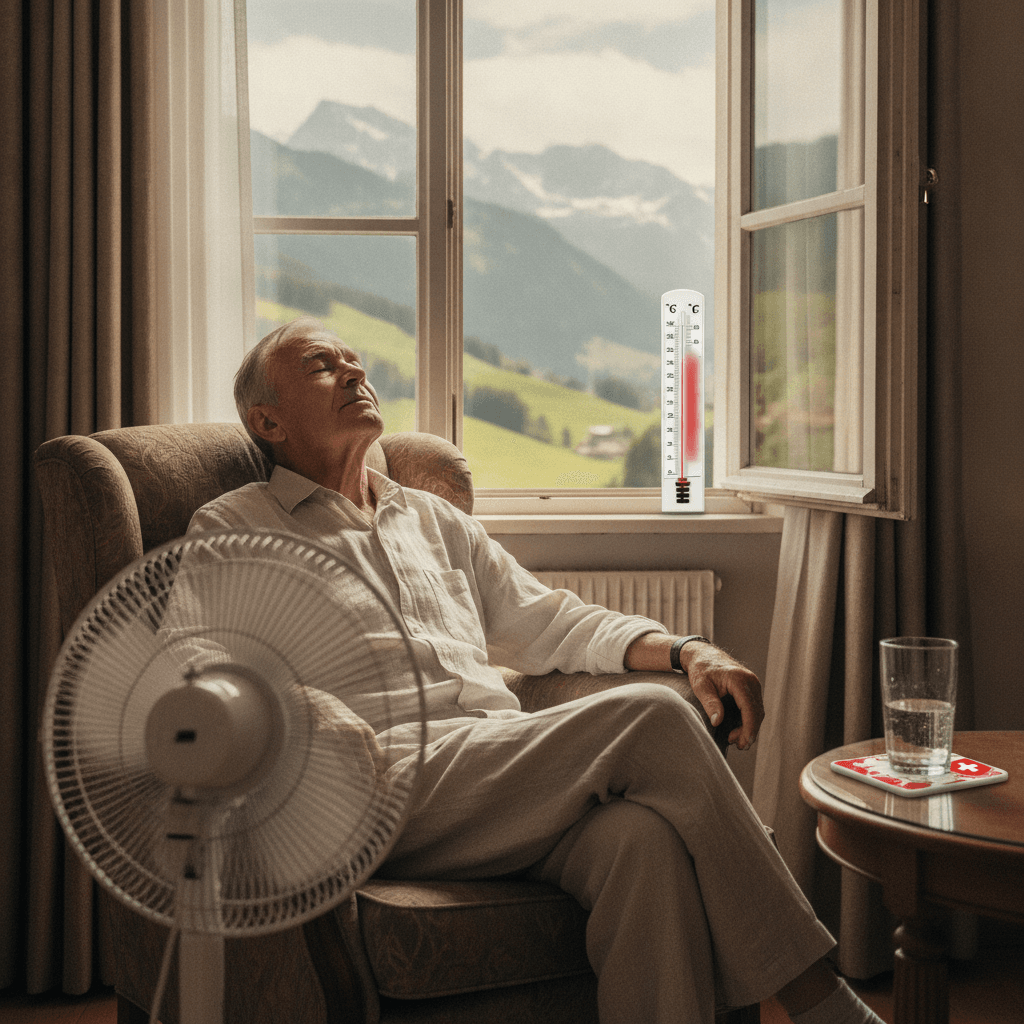
What does excess summer mortality mean?
Excess summer mortality (Übersterblichkeit) refers to the number of deaths above what would normally be expected during a given period. During heatwaves, this excess is attributable to the direct and indirect effects of high temperatures.
Heat-related mortality (hitzebedingte Sterblichkeit) rarely appears as a cause of death on its own. Heat typically aggravates existing conditions, including cardiovascular and respiratory illnesses, and can lead to dehydration and circulatory collapse.
The distinction is important: heatstroke caused by extreme heat is rare, but excess mortality triggered by heat stress is statistically measurable and significant.
How many victims did the most recent Swiss heatwave claim?
In Switzerland, the nationwide heat-related mortality rate in 2025 was 4.5 deaths per 100,000 inhabitants. This figure was published by the National Centre for Climate Services (NCCS).
This is a national average. There were significant differences between cantons and regions, meaning that individual areas recorded higher or lower figures.
The rate of 4.5 is difficult to interpret on its own. Applied to a population of approximately 9 million, it illustrates that heat is a significant public-health factor, even in a country with an advanced healthcare system.
What do the preliminary European data show?
Preliminary European estimates indicate more than 30,000 heat-related excess deaths across the continent in connection with the 2025 summer heatwaves. This is reflected in a compilation published by thelocal.ch.
These figures are preliminary. Estimates of heat-related mortality are based on statistical models, and the final figures may change once the official mortality data have been fully processed.
The European picture is important because Switzerland is not an isolated case. The heatwaves affecting southern and central European regions are driven by the same atmospheric phenomena that also reach parts of Switzerland.
Who are the main victims of heat in Switzerland according to the statistics?
According to Swiss analyses, the main risk factors associated with heat can be clearly identified. People over 75 and women are the most vulnerable.
Other risk factors include:
Multiple chronic conditions – cardiovascular diseases, respiratory conditions and diabetes.
Low socioeconomic status – fewer resources for protection, such as cooling and suitable housing.
Homelessness – prolonged exposure to outdoor heat.
Indoor temperatures above 24 °C – poorly cooled homes do not allow the body to rest, even at night.
Urban heat island effect (städtische Wärmeinsel) – built-up, concrete urban areas are considerably warmer than the surrounding green spaces.
Persistently high indoor temperatures above 24 °C require particular attention. An unventilated, overheated home can be dangerous even if the resident does not go out into the sun.
Why does heat-related mortality decline when summers are getting hotter?
Swiss data show that a certain degree of adaptation among the population can be observed – partly as a result of cantonal heat action plans (Hitzeaktionsplan), heat alerts and public information campaigns.
However, this improvement associated with adaptation is not observed on extremely hot days. An analysis of the period between 2004 and 2025 shows that, on the hottest days, the measures available so far are insufficient to reduce the risk of death.
This is an important message: the system and the population can respond to moderate heat, but extreme peaks continue to pose a serious danger.
Why is this important for Hungarians living in Switzerland?
A significant proportion of the Hungarian community living in Switzerland is concentrated in major cities – Zürich, Basel, Genève and Bern – and their agglomerations. These are precisely the urban heat islands where heat exposure is strongest.
Older Hungarian relatives living alone require particular attention. Age over 75 is the main risk factor, and language barriers may also make it more difficult to access official heat alerts (Hitzewarnung).
Housing is an important practical consideration. Many rental apartments – especially in older buildings or attic apartments – are difficult to cool in summer, and air conditioning is far from common in Switzerland. In such cases, persistently high indoor temperatures above 24 °C pose a realistic risk.
Anyone visiting or hosting an elderly parent from Hungary during the summer should monitor the heat situation in both countries, as heatwaves often affect the region at the same time.
The role of official Swiss health information
In Switzerland, several federal institutions address the health effects of heat. The National Centre for Climate Services (NCCS) compiles data on heat-related mortality, while the Federal Office of Public Health (BAG) provides health recommendations.
The Federal Office for the Environment (BAFU) and MeteoSchweiz issue heat alerts, while data from the Federal Statistical Office (BFS) provide the basis for mortality statistics. The Swiss Tropical and Public Health Institute (Swiss TPH) also plays a role in public health research.
A substantial part of heat protection takes place at cantonal level. The cantons operate their own heat action plans (Hitzeaktionsplan); for example, Sankt Gallen also publishes prevention and information materials relating to heat.
This cantonal structure means that specific recommendations, alert thresholds and services may vary depending on where you live. It is advisable to check your own canton’s health website.
Limitations and interpretation of the data
Figures for heat-related mortality are statistical estimates, not direct counts of deaths by cause. The models infer the impact of heat from the difference between expected and actual mortality.
European data, and in some cases Swiss data, may also be preliminary. The final figures may change after full data processing, so the numbers reported now should be treated with caution.
The national average—for example, 4.5 deaths per 100,000 inhabitants—conceals substantial regional differences. The figure for a particular canton or city may differ significantly from this.
The methodology is also evolving, and different institutions may use different calculation approaches. As a result, figures from different sources are not always directly comparable.
Sources
National Centre for Climate Services (NCCS) – heat-related mortality
swissinfo.ch – heatwave and excess mortality among older people
Related Articles
In Brief
In Switzerland, the national heat-related mortality rate in 2025 was 4.5 cases per 100,000 inhabitants, with significant cantonal and regional differences. People over 75, women, those with chronic illnesses, and people living in poorly cooled homes are most at risk; current protective measures are still insufficient to adequately reduce the risks posed by extreme heatwaves.
Key Takeaways
- During periods of extreme heat, pay particular attention to relatives over 75 who live alone.
- Check the indoor temperature, as temperatures remaining above 24 °C can themselves pose a health risk.
- Follow heat warnings and recommendations from MeteoSchweiz, BAFU, and your canton’s health authority.
- Extra caution is warranted during heatwaves for people with chronic cardiovascular or respiratory diseases or diabetes.
- Do not automatically apply the Swiss national average to your municipality or canton, as regional differences are significant.
- Interpret heat-related mortality figures as estimates, taking their methodological limitations into account.
Frequently Asked Questions
How many people died because of the heat in Switzerland in 2025?
According to the National Centre for Climate Services, Switzerland’s national heat-related mortality rate in 2025 was 4.5 deaths per 100,000 inhabitants. This is a national average, so individual cantons and regions may have recorded different figures.
Who is most at risk during a heatwave in Switzerland?
People over 75 and women are at greatest risk. The risk may be particularly high in cases of multiple chronic illnesses, low socioeconomic status, homelessness, or housing that is difficult to cool.
Why can heat cause death if heatstroke does not occur?
Heat-related mortality rarely appears as a standalone cause of death. High temperatures often aggravate existing cardiovascular and respiratory diseases and can also lead to dehydration and circulatory collapse.
Why are indoor temperatures above 24 °C dangerous?
Indoor temperatures that remain above 24 °C, especially in homes with poor ventilation or limited cooling options, prevent the body from recovering properly even at night. This can cause heat stress even when the person is not exposed to direct sunlight.
Has heat-related mortality in Switzerland declined due to adaptation?
Swiss data from 2004 to 2025 indicate some degree of population adaptation, potentially supported by heat action plans, heat warnings, and public information. However, on the hottest days, current protective measures have not proved sufficient to reduce the risk of death.
Why is this particularly important for Hungarians living in Switzerland?
A significant proportion of Hungarians living in Switzerland reside in cities and their surrounding agglomerations, where the urban heat-island effect can intensify heat exposure. For older Hungarian relatives living alone, language barriers and homes that are difficult to cool make it particularly important to follow heat warnings and cantonal information.
How accurate are heat-related mortality figures?
These figures are statistical estimates that infer the impact of heat from the difference between expected and actual mortality. Preliminary figures may change after complete data processing, and differences in methodology between institutions mean that not all figures can be compared directly.
Related articles

Switzerland May Decide to Tighten Its Neutrality: What Should You Know?
The neutrality initiative would prohibit economic sanctions against states engaged in armed conflict. We summarize what is at stake and what it could mean for Hungarians living in Switzerland.

Why Is Switzerland Successful, and Why Should It Not Be Taken for Granted?
Switzerland’s economic success is not a natural given: it depends on performance, innovation, fiscal discipline and adaptability in the labour market.

Swiss wages may rise in 2027: what can you expect?
The extent of the 2027 Swiss wage increase is not yet known. Learn how to interpret your employer’s announcement, nominal wages and real wages.