Discrimination in Employment and Housing Searches in Switzerland: What Should You Watch Out For?
Svájcban a külföldi név, akcentus vagy származás hátrányt jelenthet az állás- és lakáskeresésben. Kutatások szerint a nem svájci nevű jelentkezőknek átlagosan 8–10 százalékponttal kisebb esélyük van lakásmegtekintési meghívásra, különösen az olcsóbb lakásoknál és vidéken. A jogi védelem többek között a ZGB 28. cikkén és rasszista diszkrimináció esetén a StGB 261bis cikkén alapul, de az ügyek bizonyítása nehéz. Ezért célszerű minden kommunikációt, dátumot és elutasítást megőrizni.

Is there systemic discrimination in the Swiss labour market?
Yes, it is present in measurable forms, particularly in the housing market. Tests conducted by universities in Zürich and Bern show that applicants with non-Swiss names are, on average, 8–10 percentage points less likely to be invited to view an apartment.
This disadvantage is not uniform. It is particularly pronounced for less expensive apartments with monthly rents of CHF 500–1000, as well as in rural regions. The difference may be smaller in the more expensive segment of major cities.
Discrimination in job searches (Diskriminierung bei der Stellensuche) is more difficult to measure, but the legal framework clearly prohibits certain forms of it. Discrimination may take the form of assumptions based on a person’s name, accent, nationality or origin.
Why is this particularly relevant to Hungarians?
As a Hungarian citizen you are considered an EU citizen under the Agreement on the Free Movement of Persons (FZA, 1999) in the Swiss legal system. This gives you a strong legal position when it comes to employment and housing.
However, legal status does not protect you from everyday prejudice. A Hungarian-sounding name (Wohnungssuche during the application process) or a noticeable accent during a phone call can likewise trigger the 8–10 percentage-point disadvantage that research has identified among applicants with non-Swiss names.
According to the experiences of Hungarian communities in Zürich, Bern, Genève and Basel, language barriers and the lack of a local network make the situation even more difficult—particularly during the first months after moving, when there is not yet a Swiss reference or a long payment history.
Can a landlord reject me solely because of my foreign name or nationality?
Under the principle of freedom of contract, a private landlord has considerable discretion when selecting among applicants and is not required to explain the decision. This makes discrimination in the search for housing (Diskriminierung bei der Wohnungssuche) particularly difficult to identify.
If the discrimination is not open but covert, the affected person may invoke a violation of personality rights under Article 28 of the Swiss Civil Code (Zivilgesetzbuch, ZGB)Personality rights protection) may bring an action and claim non-pecuniary compensation (Genugtuung).
In practice, however, proving this is extremely difficult. The principal landlord rarely states the real reason for the refusal openly, so the person concerned is generally in a weak evidentiary position.
What legal protection applies to people looking for housing?
The primary instrument is the protection of personality rights under Article 28 ZGB. In addition, an openly racist refusal may also raise issues under criminal law.
The criminal-law provision on racial discrimination (Rassendiskriminierung Strafnorm)—Article 261bis of the Criminal Code (Strafgesetzbuch, StGB)—sanctions discrimination based on race, ethnicity or religion under certain conditions.
It is important to maintain realistic expectations: these rules exist, but because of the difficulties involved in proving a case, the legal route is often lengthy and its outcome uncertain. Prevention and documentation are therefore at least as important as knowing the available legal remedies.
What questions are unlawful in a job interview?
Job applicants are protected by two central provisions. Article 3 of the Gender Equality Act (Gleichstellungsgesetz, GlG) strictly prohibits direct and indirect discrimination based on gender, marital status or pregnancy—explicitly during the recruitment process as well.
Accordingly, questions about pregnancy, plans to have children or marital status may be problematic if they influence the hiring decision.
Article 328 of the Swiss Code of Obligations (Obligationenrecht, OR) requires the protection of an employee’s personality and dignity during the employment relationship. This protection also extends to treatment in the workplace.
What should the person concerned document?
Documentation can strengthen even the weakest evidentiary position. It is advisable to record every relevant detail while the events are still fresh.
Preserving written communications: the full text of emails, messages and responses to advertisements, including dates.
Recording the chronology: when the application was submitted, when and what response was received, and who the contact person was.
Saving the advertisement: a screenshot of the property or job advertisement and the conditions stated in it.
Recording spoken statements: questions and statements made during an interview or by telephone, phrased as accurately as possible immediately after the conversation.
Recording witnesses: if another person was present, their name and contact details.
Comparative evidence: if it is known that an applicant with a similar profile and a Swiss-sounding name received different treatment.
When should I seek official assistance, and where can I turn?
It is advisable to seek assistance if the suspicion of discrimination is based on specific, documented events, or if the situation affects the employment relationship or the security of one’s housing.
Cantonal equality offices (Kantonale Fachstellen für Gleichstellung) – in cases of gender-based discrimination.
Conciliation authority (Schlichtungsbehörde) – for the preliminary resolution of employment-law and tenancy disputes.
Counselling Network for Victims of Racism (Beratungsnetz für Rassismusopfer, network-racism.ch) – in cases of discrimination based on origin or ethnicity.
Trade unions (Unia, transfair) – for members facing workplace conflicts or discrimination in recruitment.
Official bodies often offer free initial guidance and help assess whether there are realistic legal grounds. Here too, differences between cantons are significant: the services and procedures available vary depending on the place of residence.
Limitations of the sources and the role of personal accounts
The true extent of discrimination is difficult to quantify because most cases never become public. The figure of an 8–10 percentage-point disadvantage in the housing market comes from experimental tests and does not capture the full range of personal experiences.
Personal accounts therefore play an important role: they shed light on situations that statistics do not reveal. At the same time, no single account can replace the legal assessment required in a specific case.
It is realistic to expect that legal protection exists, but enforcing it requires effort and evidence. Documentation and contacting the appropriate body together provide the best starting point.
Sources
Related Articles
In Brief
In Switzerland, applicants with non-Swiss names may have an average of 8–10 percentage points less chance of being invited to an apartment viewing, particularly for cheaper apartments and in rural regions. Legal protection exists, but proving indirect discrimination is difficult, making it essential to document written communication, advertisements and events accurately.
Key Takeaways
- Keep emails, messages, advertisements and responses to rejections, together with their dates.
- Record applications, telephone conversations, interview questions and any witness details in chronological order.
- If you suspect discrimination when searching for housing, consider protection of personality rights under Article 28 ZGB.
- In cases of openly racist rejection, consider the legal options associated with Article 261bis StGB.
- During job interviews, document questions concerning pregnancy, plans to have children and marital or family status, especially if they could influence the hiring decision.
- If the case is specifically documented, contact a cantonal specialist authority, conciliation authority, anti-racism counselling network or trade union.
Frequently Asked Questions
How significant a disadvantage can applicants with foreign-sounding names face in the Swiss housing market?
Tests conducted by the universities of Zürich and Bern indicate that applicants with non-Swiss names may have an average of 8–10 percentage points less chance of being invited to an apartment viewing. The difference is particularly pronounced for apartments with monthly rents of CHF 500–1,000 and in rural regions; it may be smaller in the more expensive urban segment.
Can a landlord reject someone solely because of their foreign-sounding name or nationality?
Under the principle of freedom of contract, private landlords have considerable discretion and are generally not required to give reasons for their decision. However, indirect discrimination may raise issues concerning personality rights, and legal proceedings may be possible under Article 28 ZGB. The main obstacle is usually proving the discrimination.
What legal protection applies to people searching for housing in Switzerland?
The main legal instrument is protection of personality rights under Article 28 ZGB. In cases of openly racist rejection, Article 261bis StGB may also be relevant if its conditions are met. However, legal proceedings can be lengthy and their outcome uncertain.
Which questions may be unlawful in a Swiss job interview?
Article 3 GlG prohibits direct and indirect discrimination based on sex, marital or family status, or pregnancy, including during the recruitment process. Questions about pregnancy, plans to have children or family status may therefore be problematic if they influence the hiring decision. It is advisable to record such questions and the circumstances of the interview immediately.
What should be documented if discrimination is suspected?
Keep emails, messages, applications and advertisements, together with their dates. Make a chronological record of contacts, questions and statements, and note the details of any witnesses. If available, different treatment compared with comparable applicants may also be important.
Where can the person affected seek official assistance?
In cases of gender-based discrimination, a cantonal equality authority may be appropriate; employment or tenancy disputes may be referred to a conciliation authority. For discrimination based on origin or ethnicity, the Beratungsnetz für Rassismusopfer can provide support, while Unia or transfair may assist members with workplace conflicts. Available services vary from canton to canton.
Related articles

What does Raiffeisen’s reduction of 180 positions in Switzerland mean?
Raiffeisen Schweiz may eliminate up to 180 positions by 2027. More than half of the positions will be reduced without direct redundancies.
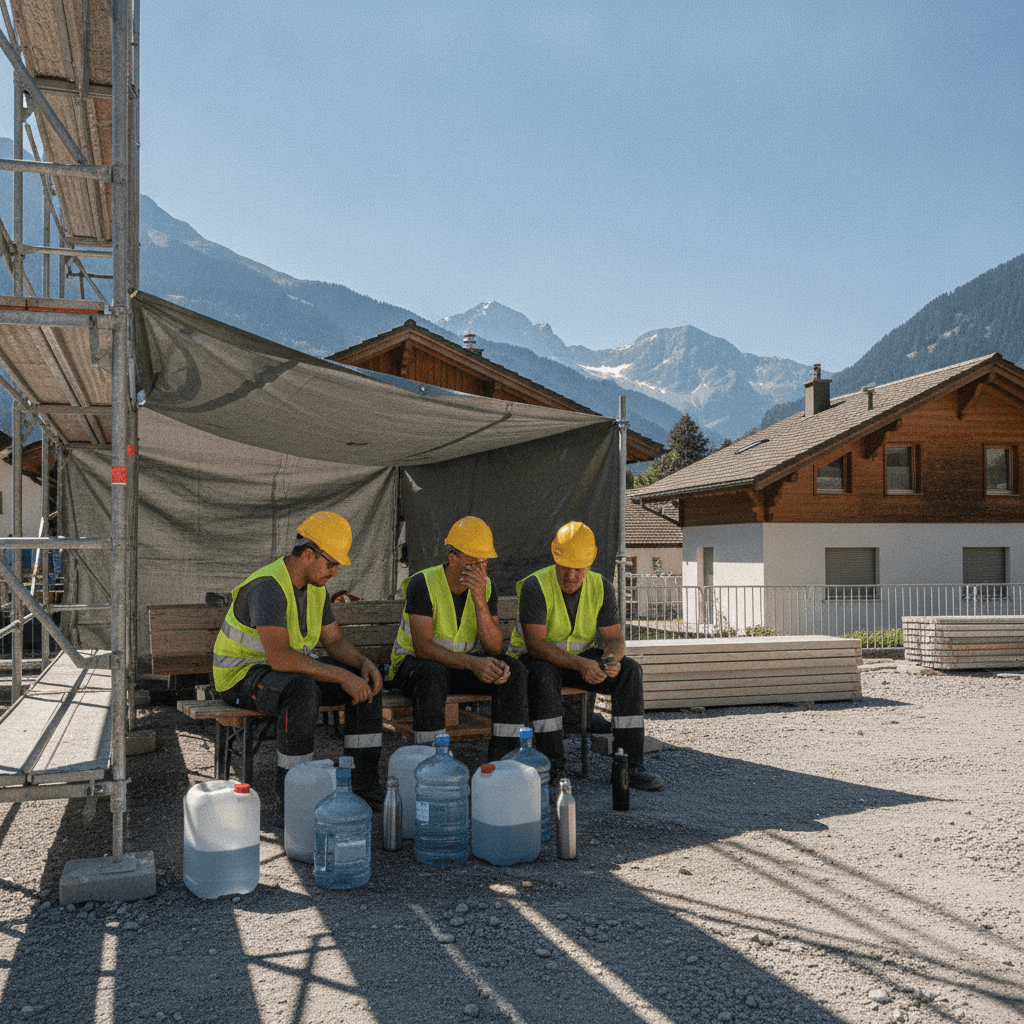
Do construction sites in Switzerland have to close during heatwaves?
In Switzerland, working during hot weather is a health and safety issue. Learn about the demands of the Geneva trade union and the practical steps to take.

Why Is Switzerland Europe’s Leader in Workplace AI Adoption?
A recent survey shows that Switzerland leads Europe in workplace adoption of artificial intelligence. What does this mean for Hungarian employees?